I Refuse the Graceful Slide Into Cultural Irrelevance / https://archive.is/S4i86
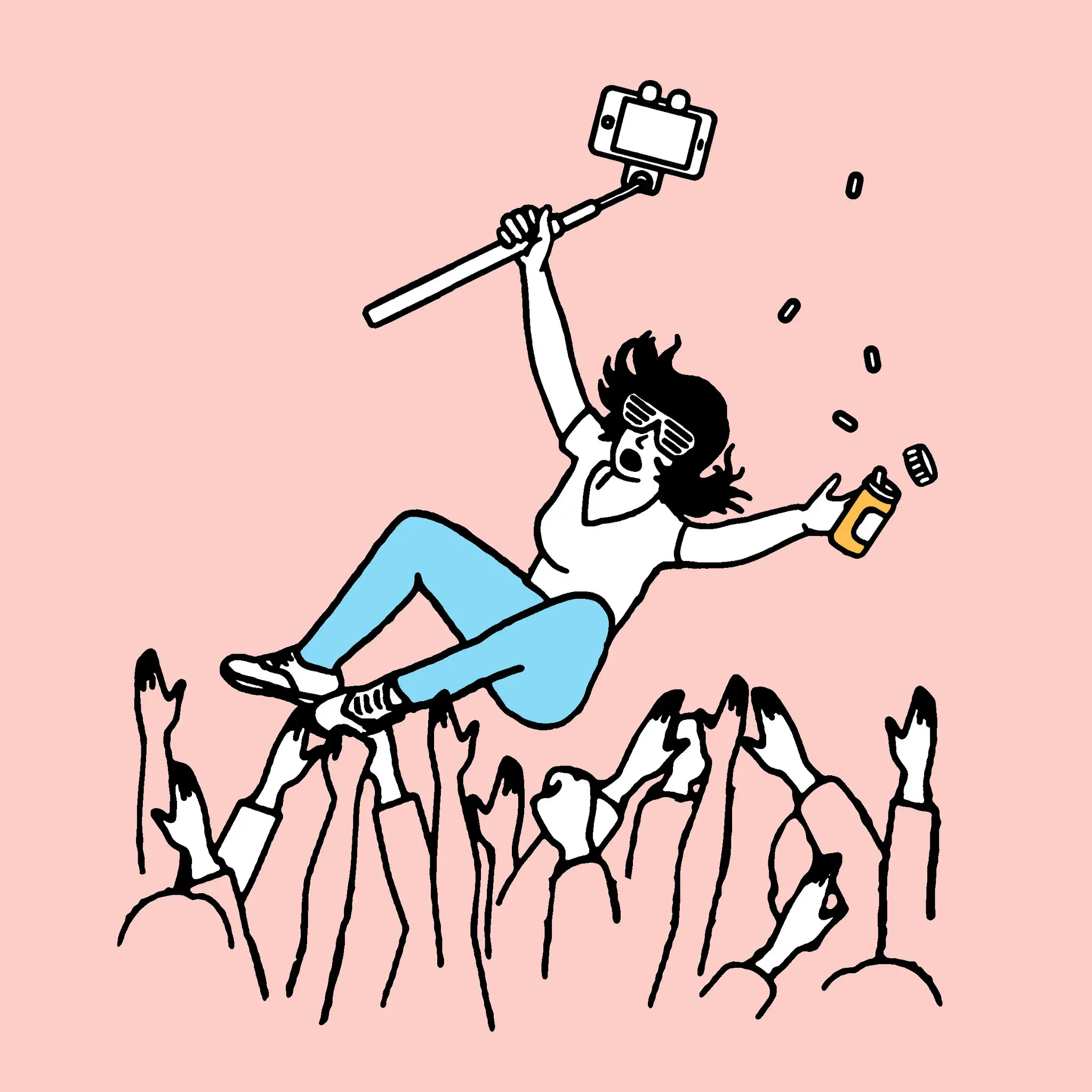
There’s a ritual I do these days: In the evening, around 6 p.m., I walk downstairs and survey the line of young people who are single file around my block, waiting to get into the concert venue next door.
Sometimes I examine their outfits, like an aging millennial anthropologist. Other times, I ask who they’re waiting to see — so I can immediately search the bands on Spotify.
Recently, this got confusing, when a disaffected teenager in Doc Martens and a baggy T-shirt, the kind of clothes I once associated with my ‘90s youth, explained that she had camped out overnight to see “Jayden” — an artist I spent the next 20 minutes searching on my phone, to no avail. I later got a hot tip from my 13-year-old neighbor that his name is actually spelled jxdn, and that he got his start in Sway House, which I pretended to know the meaning of until I could Google it later.
I don’t know why I felt the need to lie about jxdn, but I do know this: There are only two types of people who pretend to be cool in front of 13-year-olds — other 13-year-olds and middle-aged losers, of which I am apparently now one.
“Middle age” is a complicated label for any generation that reaches it. But for a certain cohort of millennials — or, at least, this case study of one — this rite of passage feels like a particularly tough pill to swallow (and not just because of all the other supplements I now swallow on a daily basis).
We are a generation who spent the first half of our lives being breathlessly courted. Marketers scrutinized our spending patterns, our lifestyle choices, our food tastes; the media proclaimed us the political and economic force that had the power to shape America. Sure, every generation gets told some of those things, but not every generation believes it quite like we did. And we had power in numbers. Love us or hate us, there are a lot of millennials, which means our tastes are important. Or at least, they used to be.
In my early 20s, there was an entire year that I lived primarily on money earned by taking millennial market research surveys, for which the only prerequisite was that I fell in that cohort. I weighed in on car interiors, two-way pagers and flip phones like the ones that are now considered cool again because they’re “retro,” which is a phase in the cool life cycle enjoyed by clothes and accessories, but not so much by people. Those surveys paid well compared with what I was making at my unpaid internship. (We millennials didn’t demand pay for our work back then.) And they were more reliable than tips, which is what I was earning as a bartender at night. (Being a bartender: another thing that was cool … before the three-day hangover hit.)
Even once I got a “real job” in journalism, I learned quickly that mentioning my unique “millennial perspective” was sometimes the only way to be heard in rooms full of older people with power. I made sure to say it during job interviews, and placed it front and center on my résumé. I did this in part because it was effective: We were digital natives, beginning our careers at the exact moment companies were struggling to transition into a fully online world. It was digital do or die, which gave us disproportionate sway over panicked bosses and companies who were scared to make a wrong move.
But it was also more subtle than that. I hadn’t grown up in New York, or gone to an Ivy, or had an uncle who knew a guy who knew a guy, but I had something those people didn’t. It didn’t take long to make the calculation that I was not going to make inroads, or even a half-baked impression, by competing with more experienced people on their terms. But maybe, just maybe, I could sell them on something they didn’t understand.
And so I made it my job to unearth weird things on the internet, to find enough examples of young people doing things to warrant a trend piece, to infiltrate the magazine with slang and subcultures and to take all of those things seriously. I found a niche in cool, or young or whatever you want to call it, and I got used to it being my thing. Only recently have I begun to realize — panic about? — just how much of my professional identity was built on this. Is that why the generational fall from relevance feels so particularly painful? We were treated with outsized importance from such a young age. We don’t know irrelevance.
Millennials aren’t the first generation to age out of cool, obviously. But wasn’t there a natural progression that was supposed to occur? The process of slowly transitioning into cultural wallpaper was supposed to be eased by a series of trade-offs. In exchange for permanent uncoolness, for consenting to being made fun of for our skinny jeans and our side parts, we were supposed to have things. Things like children, a house, a retirement fund, a job that is boring but stable.
And yet, so few of us have those things. I do have a small retirement account, most of it rolled over from that magazine where I worked in my 20s. Sometimes I wish I had a job that was boring but stable, but then I remember that even when I had a stable, not-boring job — with benefits and an ergonomic chair — I traded it for flexibility. I don’t have kids … though I do have frozen embryos.
What is it they say about aging, that with time comes the ability to care less? About how, when you just stop trying to keep up with the latest internet feud or TikTok trend or cool new pop-punk artist, you begin to have time for the more “important” things? (What are those, exactly?) How if you just stop trying so hard, you can save that brain space for … I don’t know, organizing your supplements into one of those neat carrying cases?
That’s what Instagram tells me is supposed to happen, at least. But recently I’ve started to wonder if I’m beginning to care more. Why should age come with a permanent loss of cultural cachet, if you haven’t entirely given up? Of course I don’t want to lose my cool; it’s inextricably intertwined with my professional sense of self (and value). And I know too much about what happens to a person’s relevance as they age, the ways our culture continues to valorize youth (especially for women).
So while it is obviously the least cool thing imaginable to work at being cool, I have decided to embrace it, like a job. Cool used to come effortlessly; now it requires attention. I think of it less like clinging and more like maintaining — like a good skin care routine.
Luckily for me, or perhaps unluckily, I live in a city (and above a nightclub) where that’s possible, in a time when all the things from my youth seem to be suddenly cool again, which at least makes it easy to keep up. I also teach college students. (They need me for affirmation and advice; I need them for relevance. Call it symbiotic intergenerational codependence.)
We live in a funny time when it comes to age and culture. Nobody looks their age anymore; and not just because Botox came on the market when we were in our early 20s. (Ever seen a 15-year-old with a YouTube account apply makeup? I recommend it, if you’d like to learn a thing or two.) And what’s cool, generationally speaking, is just more mixed up than it used to be because we all live online, an equal-access space. Which is why you’ll find me crying in the shower, my own badly applied eyeliner smeared down my face, listening to a 20-year-old sing about heartbreak, while my teen informants explain to me that cool new band from the Barbie movie — by which they mean the Indigo Girls.
I recently found myself face to face with this cognitive dissonance, when I wound up at the same bar as one of my students. I had gone there because it’s on my corner, and serves only natural wine — better for old-person hangovers. She was there because she’d seen the bar on TikTok. But there we were, at the same place, both of us wondering what exactly that said about each of us — did it make her cool and me lame, or the other way around?
Or maybe I was the only one wondering. We didn’t have the chance to discuss it because I had to get out of there quickly — the music was too loud for my aging ears.
The Times is committed to publishing a diversity of letters to the editor. We’d like to hear what you think about this or any of our articles. Here are some tips. And here’s our email: letters@nytimes.com.
Follow The New York Times Opinion section on Facebook, Twitter (@NYTopinion) and Instagram.
Jessica Bennett is a contributing editor in the Opinion section of The Times. She teaches journalism at New York University and is the author of “Feminist Fight Club” and “This Is 18.” @jessicabennett • Facebook
There’s a ritual I do these days: In the evening, around 6 p.m., I walk downstairs and survey the line of young people who are single file around my block, waiting to get into the concert venue next door.
Sometimes I examine their outfits, like an aging millennial anthropologist. Other times, I ask who they’re waiting to see — so I can immediately search the bands on Spotify.
Recently, this got confusing, when a disaffected teenager in Doc Martens and a baggy T-shirt, the kind of clothes I once associated with my ‘90s youth, explained that she had camped out overnight to see “Jayden” — an artist I spent the next 20 minutes searching on my phone, to no avail. I later got a hot tip from my 13-year-old neighbor that his name is actually spelled jxdn, and that he got his start in Sway House, which I pretended to know the meaning of until I could Google it later.
I don’t know why I felt the need to lie about jxdn, but I do know this: There are only two types of people who pretend to be cool in front of 13-year-olds — other 13-year-olds and middle-aged losers, of which I am apparently now one.
“Middle age” is a complicated label for any generation that reaches it. But for a certain cohort of millennials — or, at least, this case study of one — this rite of passage feels like a particularly tough pill to swallow (and not just because of all the other supplements I now swallow on a daily basis).
We are a generation who spent the first half of our lives being breathlessly courted. Marketers scrutinized our spending patterns, our lifestyle choices, our food tastes; the media proclaimed us the political and economic force that had the power to shape America. Sure, every generation gets told some of those things, but not every generation believes it quite like we did. And we had power in numbers. Love us or hate us, there are a lot of millennials, which means our tastes are important. Or at least, they used to be.
In my early 20s, there was an entire year that I lived primarily on money earned by taking millennial market research surveys, for which the only prerequisite was that I fell in that cohort. I weighed in on car interiors, two-way pagers and flip phones like the ones that are now considered cool again because they’re “retro,” which is a phase in the cool life cycle enjoyed by clothes and accessories, but not so much by people. Those surveys paid well compared with what I was making at my unpaid internship. (We millennials didn’t demand pay for our work back then.) And they were more reliable than tips, which is what I was earning as a bartender at night. (Being a bartender: another thing that was cool … before the three-day hangover hit.)
Even once I got a “real job” in journalism, I learned quickly that mentioning my unique “millennial perspective” was sometimes the only way to be heard in rooms full of older people with power. I made sure to say it during job interviews, and placed it front and center on my résumé. I did this in part because it was effective: We were digital natives, beginning our careers at the exact moment companies were struggling to transition into a fully online world. It was digital do or die, which gave us disproportionate sway over panicked bosses and companies who were scared to make a wrong move.
But it was also more subtle than that. I hadn’t grown up in New York, or gone to an Ivy, or had an uncle who knew a guy who knew a guy, but I had something those people didn’t. It didn’t take long to make the calculation that I was not going to make inroads, or even a half-baked impression, by competing with more experienced people on their terms. But maybe, just maybe, I could sell them on something they didn’t understand.
And so I made it my job to unearth weird things on the internet, to find enough examples of young people doing things to warrant a trend piece, to infiltrate the magazine with slang and subcultures and to take all of those things seriously. I found a niche in cool, or young or whatever you want to call it, and I got used to it being my thing. Only recently have I begun to realize — panic about? — just how much of my professional identity was built on this. Is that why the generational fall from relevance feels so particularly painful? We were treated with outsized importance from such a young age. We don’t know irrelevance.
Millennials aren’t the first generation to age out of cool, obviously. But wasn’t there a natural progression that was supposed to occur? The process of slowly transitioning into cultural wallpaper was supposed to be eased by a series of trade-offs. In exchange for permanent uncoolness, for consenting to being made fun of for our skinny jeans and our side parts, we were supposed to have things. Things like children, a house, a retirement fund, a job that is boring but stable.
And yet, so few of us have those things. I do have a small retirement account, most of it rolled over from that magazine where I worked in my 20s. Sometimes I wish I had a job that was boring but stable, but then I remember that even when I had a stable, not-boring job — with benefits and an ergonomic chair — I traded it for flexibility. I don’t have kids … though I do have frozen embryos.
What is it they say about aging, that with time comes the ability to care less? About how, when you just stop trying to keep up with the latest internet feud or TikTok trend or cool new pop-punk artist, you begin to have time for the more “important” things? (What are those, exactly?) How if you just stop trying so hard, you can save that brain space for … I don’t know, organizing your supplements into one of those neat carrying cases?
That’s what Instagram tells me is supposed to happen, at least. But recently I’ve started to wonder if I’m beginning to care more. Why should age come with a permanent loss of cultural cachet, if you haven’t entirely given up? Of course I don’t want to lose my cool; it’s inextricably intertwined with my professional sense of self (and value). And I know too much about what happens to a person’s relevance as they age, the ways our culture continues to valorize youth (especially for women).
So while it is obviously the least cool thing imaginable to work at being cool, I have decided to embrace it, like a job. Cool used to come effortlessly; now it requires attention. I think of it less like clinging and more like maintaining — like a good skin care routine.
Luckily for me, or perhaps unluckily, I live in a city (and above a nightclub) where that’s possible, in a time when all the things from my youth seem to be suddenly cool again, which at least makes it easy to keep up. I also teach college students. (They need me for affirmation and advice; I need them for relevance. Call it symbiotic intergenerational codependence.)
We live in a funny time when it comes to age and culture. Nobody looks their age anymore; and not just because Botox came on the market when we were in our early 20s. (Ever seen a 15-year-old with a YouTube account apply makeup? I recommend it, if you’d like to learn a thing or two.) And what’s cool, generationally speaking, is just more mixed up than it used to be because we all live online, an equal-access space. Which is why you’ll find me crying in the shower, my own badly applied eyeliner smeared down my face, listening to a 20-year-old sing about heartbreak, while my teen informants explain to me that cool new band from the Barbie movie — by which they mean the Indigo Girls.
I recently found myself face to face with this cognitive dissonance, when I wound up at the same bar as one of my students. I had gone there because it’s on my corner, and serves only natural wine — better for old-person hangovers. She was there because she’d seen the bar on TikTok. But there we were, at the same place, both of us wondering what exactly that said about each of us — did it make her cool and me lame, or the other way around?
Or maybe I was the only one wondering. We didn’t have the chance to discuss it because I had to get out of there quickly — the music was too loud for my aging ears.
The Times is committed to publishing a diversity of letters to the editor. We’d like to hear what you think about this or any of our articles. Here are some tips. And here’s our email: letters@nytimes.com.
Follow The New York Times Opinion section on Facebook, Twitter (@NYTopinion) and Instagram.
Jessica Bennett is a contributing editor in the Opinion section of The Times. She teaches journalism at New York University and is the author of “Feminist Fight Club” and “This Is 18.” @jessicabennett • Facebook


