Navigation
Install the app
How to install the app on iOS
Follow along with the video below to see how to install our site as a web app on your home screen.
Note: This feature may not be available in some browsers.
More options
Style variation
You are using an out of date browser. It may not display this or other websites correctly.
You should upgrade or use an alternative browser.
You should upgrade or use an alternative browser.
African wars were insane
- Thread starter Skitarii
- Start date
-
🏰 The Fediverse is up. If you know, you know.
-
Want to keep track of this thread?
Accounts can bookmark posts, watch threads for updates, and jump back to where you stopped reading.
Create account

- Joined
- Aug 21, 2024
A British guy who previously attempted to overthrow the dictator of Equatorial Guinea just died...

- Joined
- Apr 2, 2023
>he doesn't know about General Butt Naked
>nevermind I can't read lol
>nevermind I can't read lol

- Joined
- Nov 26, 2024
What's really insane is all the wars but the nigger population of Apefrica managed to stay at infinigger levels. Most of the major powers that fought in WW2 saw an impact from the war in terms of population. Africa just keeps niggering along.

- Joined
- Apr 19, 2022
African birthrates have plummetted since 1950. Their average lifespan remains the same. Declining birthrates + short lifespans = extinction in a couple of decades.What's really insane is all the wars but the nigger population of Apefrica managed to stay at infinigger levels. Most of the major powers that fought in WW2 saw an impact from the war in terms of population. Africa just keeps niggering along.
- Joined
- Nov 26, 2024
Can you really trust the population numbers from such a fucked up shithole?African birthrates have plummetted since 1950. Their average lifespan remains the same. Declining birthrates + short lifespans = extinction in a couple of decades.
- Joined
- Apr 19, 2022
No I can't, as the population numbers are usually rounded up to look better on censuses, which means the birthrate is likely even LOWERCan you really trust the population numbers from such a fucked up shithole?

- Joined
- May 23, 2019
If all the African children die, who is going to pick my cocoa beans and mine my diamonds?No I can't, as the population numbers are usually rounded up to look better on censuses, which means the birthrate is likely even LOWER
- Joined
- Apr 19, 2022
Your kids will pick MY cocoa and mine MY diamonds after I enslave you.If all the African children die, who is going to pick my cocoa beans and mine my diamonds?

- Joined
- Aug 24, 2024
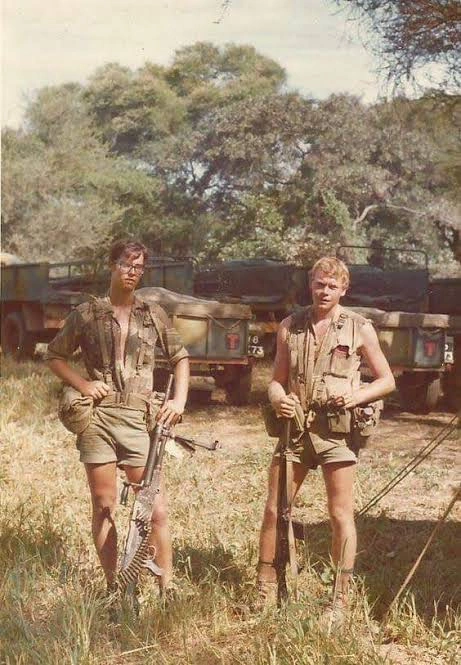
Who out here reppin’ they Rhodesian light infantry shorts? Shiiiet
- Joined
- May 23, 2019
By the time you are able to conquer and enslave my people I will be far too frail to climb a cocoa tree.Your kids will pick MY cocoa and mine MY diamonds after I enslave you.
- Joined
- Apr 19, 2022
That's why I said your kidsBy the time you are able to conquer and enslave my people I will be far too frail to climb a cocoa tree.
- Joined
- Nov 26, 2024
Those are the kind of shorts the gay cop from Reno 911 would wear. I know it was the style back then. But I am glad men don't wear short shorts anymore.


- Joined
- May 24, 2021
Why? Are you scared someone will see your fat cankles?Those are the kind of shorts the gay cop from Reno 911 would wear. I know it was the style back then. But I am glad men don't wear short shorts anymore.

Elderly beef taco
kiwifarms.net
- Joined
- Mar 15, 2024
Fun fact: best way to figure out the age of a map or globe is by looking at Africa. It changes so much it's pretty handy.

- Joined
- Mar 25, 2025
The Bush War is one of the more fascinating sub-Saharan African wars to read about because the Rhodie's military campaign was so successful, that they were able to destroy major rebel infrastructure only a few kilometers away from Mozambique's capital until the South Africans dipped due to fearing an escalation and pulled out of the war.
A militia of 2,000 trained Americans could conquer an African country in a week, if given proper resources.
Another favorite example of African indiscipline of mine is that of the The Forces Armées Zaïroises (FAZ) during the fall of Mobutu in the First Congo War. Posting a full excerpt:
"In 1996, the FAZ were the mirror of the Zairean state: most of them
existed on paper only. About 75,000 in size,23 the army was funded by
a modest budgetary outlay of between 2% and 3% of the GDP in the
1990s. Certain ‘elite units’ were supposedly better off than the average
FAZ. The Division spéciale présidentielle (DSP ) officially had 15,000
men, but, in reality, it numbered about 7000, with the majority coming
from Mobutu’s Equateur region, mostly Ngbaka troops and Ngbandi
(Mobutu’s ethnic group) officers. Commanded by General Nzimbi , a rel-
ative of Mobutu, the DSP did not, in practice, follow the ordinary mili-
tary hierarchy. The Garde civile w as about 10,000 strong, most of them
Ngbandi. Commanded by General Baramoto, another relative of Mobutu,
just like the DSP, it obeyed the president and not, in practice, the general
army staff. Generals Nzimbi and Baramoto were not professional soldiers,
but politicians-cum-businessmen, a fact that obviously did not contribute
to the quality of command in these units. More generally, the FAZ were
undermined by politicisation, nepotism, corruption and embezzlement.
As a consequence, the unpaid, untrained and unequipped officers and
soldiers were forced to ‘make ends meet’ by preying on the population;
‘clochardisé’ (turned into tramps) as it was, this army was unsurprisingly
neither committed nor professional, and it is understandable that it lost
the war, or, more accurately, that it did not fight the war. In certain well
documented cases, officers even sold weapons and ammunition to the
rebel forces before fleeing their advance.
Fighting took place only at the beginning of the conflict, when the
rebellion, which at the time was still that of the Banyamulenge sup-
ported by the Rwandan army, was attempting to carve out some territory
between Uvira and Bukavu . The rebellion used the tactics that the RPA
had applied successfully in Rwanda in 1994: a combination of infiltration
and encircling, but at the same time leaving an escape route for the FAZ,
thus limiting unnecessary losses. A source local to the fighting nicely illus-
trated this process: ‘In Nagero (…), two men unknown to local people
and travelling on a bike were arrested. On the luggage rack was a bundle
in cloth. Inside it were two disassembled AK-47s… This is the infiltration
technique of the rebels. They arrive as civilians with disassembled weap-
ons and mingle with the local population. When they have infiltrated suf-
ficiently, they appear in arms and it is then generally too late’.25
Later, another scenario was to be repeated throughout the campaign.
The AFDL announced it was about to attack a particular place and in
some cases even announced before it happened that a target had been
taken. Even before the first contact, the FAZ would typically loot the
place,26 requisition vehicles and flee. This not only allowed the rebellion to
advance easily, but also to get hold of sizeable stocks of arms and ammu-
nition on their push westwards. Thus, for instance, an aeroplane loaded
with military equipment was simply abandoned by the FAZ at Kalemie
airport. Rebel victories were easy under these circumstances: ‘The fall of
Wamba (100 km south of Isiro) was the work of three rebels arriving on
a motor bike, one carrying a lance, another a knife and the third a pis-
tol which might or might not have been loaded’.27 Even in Lubumbashi,
taken in a pincer movement through Zambia (see earlier text), the FAZ
hardly put up a fight. Kolwezi is said to have been captured by vehicles
previously seized in the town by a small group of ‘infiltrated’ rebels.28
During the war, the FAZ only put up brief spells of resistance in Goma,
Beni, Bunia, Lubumbashi and Kenge."
"
- Joined
- Nov 26, 2024
I wear shorts all the time faggot.Why? Are you scared someone will see your fat cankles?
The only cankles you see are yours and your moms when she brings your tendies to you your daily dose if Risperdal or to empty you piss jugs.
- Joined
- May 24, 2021
You mad you can't afford room service like me?I wear shorts all the time faggot.
The only cankles you see are yours and your moms when she brings your tendies to you your daily dose if Risperdal or to empty you piss jugs.
- Joined
- Nov 26, 2024
yes, I am totally mad my mom can't bring me food and empty the piss jugs I don't have because I'm not a nigger.You mad you can't afford room service like me?