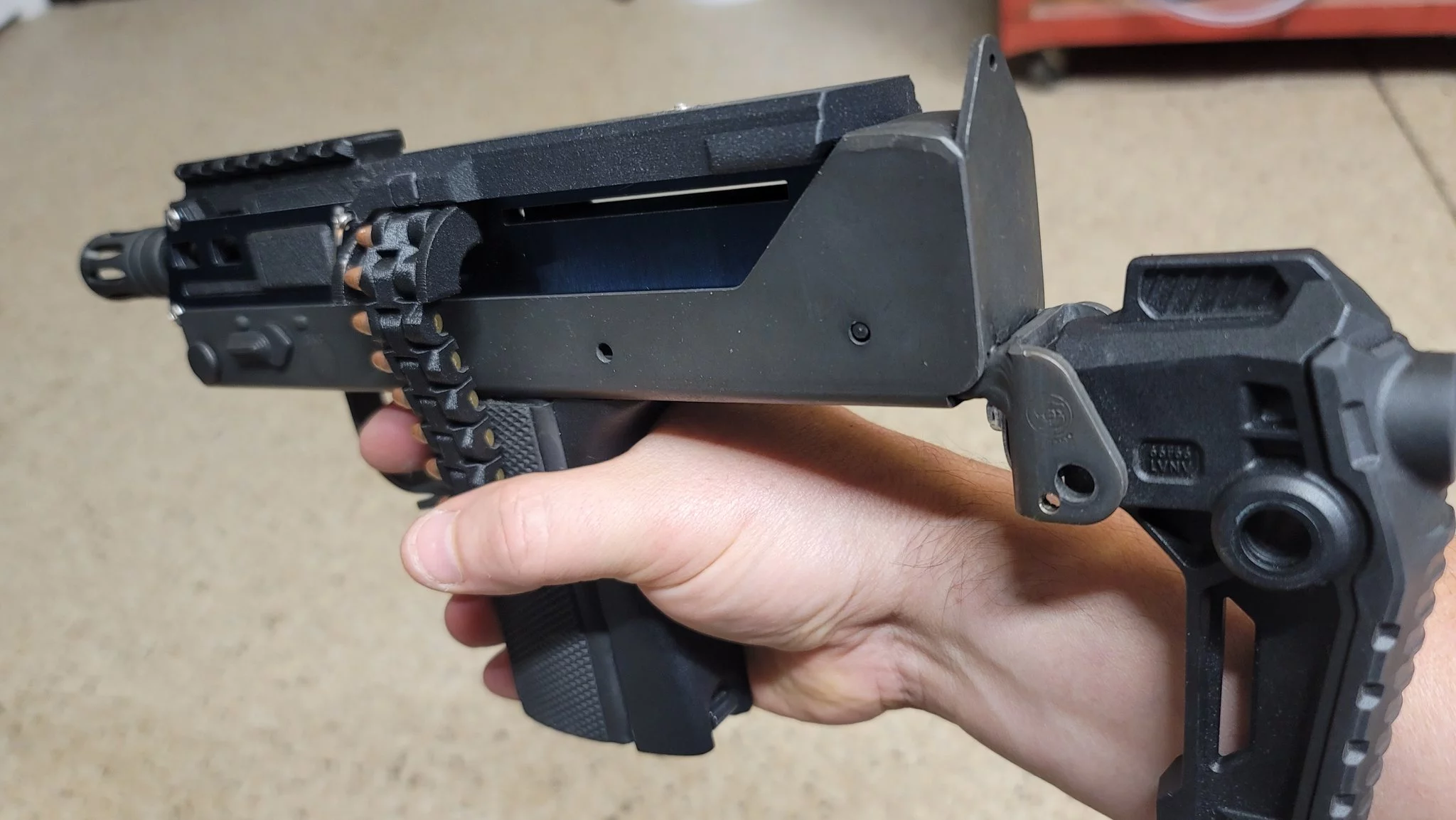
Ex Keltec Engineer Tobias Obermeit has showed off new pics of his .22 Belt fed prototype and revealed it's a MAC upper
I don't think this has been talked about here before but as many of you know there is an (alleged) effort to make (mostly) clone correct copies of the VSS/AS Val by the Latinx (alleged) ex Pill and Meth addict Brice Ronze of BSD Fabworx. Mr Ronze has a to say the least checkered history with the NFA Community and appears to operate a shitty little machine shop out of his garage. He will most likely never, ever, produce a commercially viable VSS/Val reproduction for a variety of reasons including his delusional view of metal stamping ("Stamping metal is just like folding paper")
But there may be another hope
Enter Paul Allen Smith, who most know as "Nucking Futs Yuri" an American who has lived in The Ukraine since 2012 and is a member of the Ukrainian Army. He has a residence in Texas as well. He has talked about reproducing the VSS/VAL for commercial sales in the US after the SMO ends. He appears to have much bigger and better toys available to him and as far as I can tell has never smoked meth. The best part is he has real (damaged and De-milled) examples of a Val and VSS each, not some shitty slapped together kit build whose parts are sourced from a blank firing toy made with cast parts and completely different FCG and bolt than a real Val/VSS
He first brought up US made Val/VSS reproductions in a video posted a little over two years ago, claiming to have partners and investors as well as 3D models made from the guns in his possession
Relevant part starts at 35:22
Here's a video from January 2024 talking about plans, discussions and meetings during and after SHOT
Here's a video showing his much more capable personal machine shop
And here's the video that prompted me to write this segment of this post. Posted 16 hours ago he essentially says from 2:20 onwards "sorry guise too busy can't make cool guns until SMO is over"
President Trump! President Putin! Tag team fuck The Ukraine to death so this guy can make cool guns and make a latinx methhead seethe
The Jews have officially adopted the Sig Saar (Phool Sapport Ijrael Saar) MG-338 and there's some footage in the news release showing it in the Gaza Strip.
A couple months ago I found this article from Kalashnikov Magazine but I forgot about it and it got lost in all my tabs
It is mostly about submacineguns designed by this fellow V. E. Zubkov and wholly in Russian so I'd thought I'd Google translate it and post the relevant parts along with the accompanying photos
The failed 'tandem'. Zubkov's submachine guns.
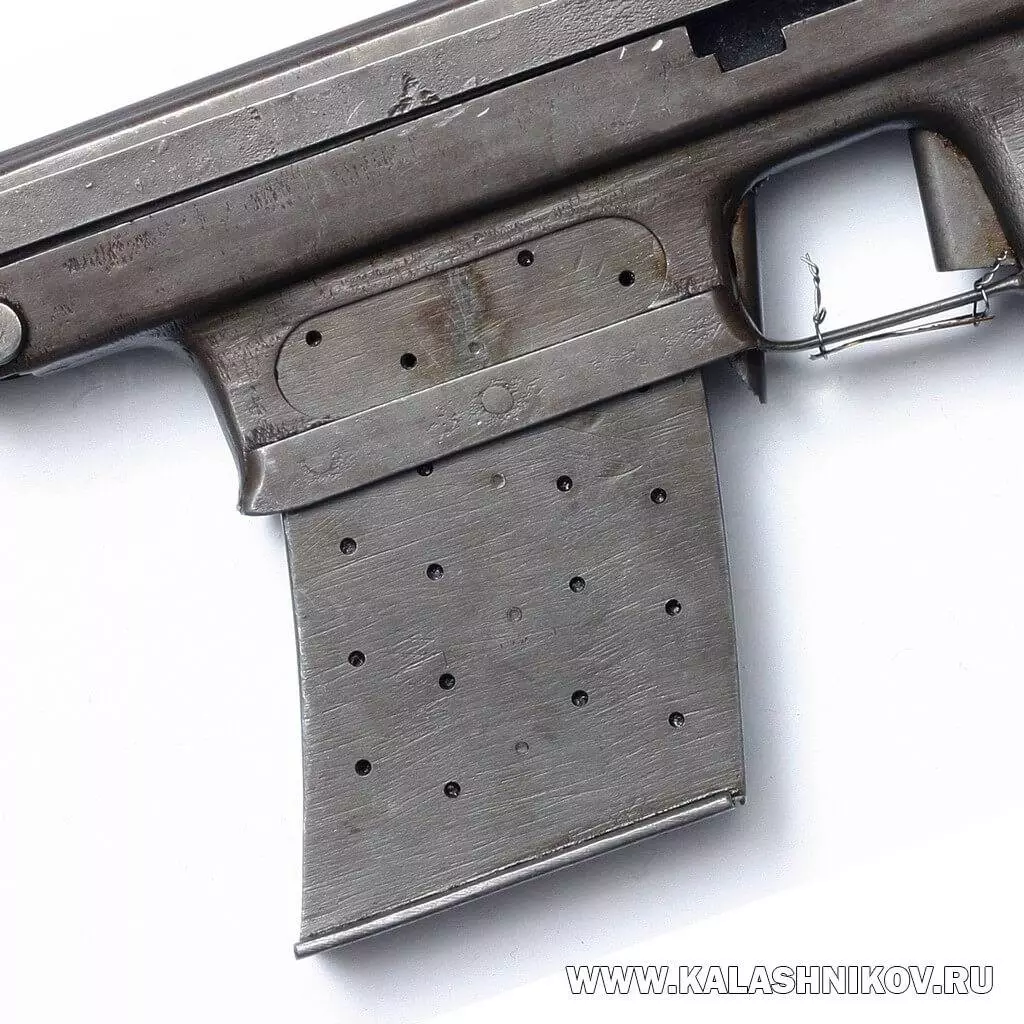
This is the second model of his design (there doesn't appear to be any photos of the first model but there are descriptions, technical details and a magazine diagram)
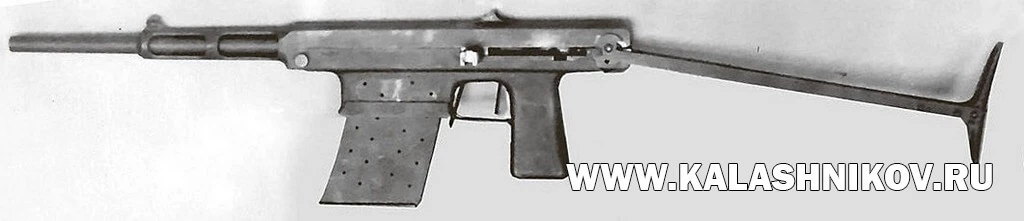
First model statistics and characteristics
-Open bolt
-Chambering: 7.62 Tokarev
-Magazine Capacity; 60
-Length with Stock folded: 545mm (21.4in)
-Length with stock unfolded: 780mm (31.7in)
-Height with magazine inserted: 230mm (9.05in)
-Barrel Length: 250mm (9.84in)
-Weight without magazine: 2.56kg (5.64lbs)
-Weight with unloaded magazine: 2.95kg (6.5lbs)
-Weight with loaded magazine: 3.28kg (7.23lbs)
-Bolt Weight: 0.688kg (1.51lbs)
-Bolt travel: 96mm (3.77in)
-Rate of fire: 726 RPM
-When field stripped # of parts is 4, total system has 22 parts
"The main feature of Zubkov's submachine gun was the design of the magazine. The magazine is double-row, made in the form of a rectangular box with a long follower, on which five cartridges were lined up in a row. Above them, another row of five cartridges was placed, and so on—until the magazine was completely filled (60 cartridges)."
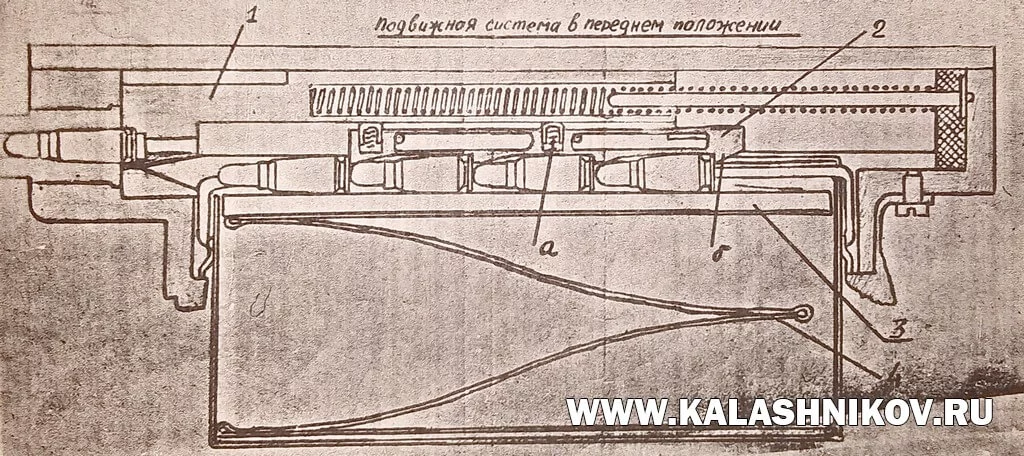
"Diagram of the feeding mechanism of the submachine gun of the first model designed by Zhukov from the NIPSVO report."
"The magazine-fed weapon designed by Zubkov operated as follows. The feeding of a round into the chamber by bolt "1" was carried out from the nearest (front) round in the magazine to the breech end of the barrel. At the same time, as the front round was fed, two spring-loaded feed lips "2" connected to the bolt pushed all other rounds in the row forward by one step. Thus, the previously positioned round behind the one fed into the chamber became the new round in the chamber."
"When the bolt recoiled after a shot, the spring-loaded feed lips lifted above the cartridges in the magazine and moved over them, eventually settling behind the base of the cartridges with their catches at the end of the recoil. In the forward movement of the bolt, the cycle of moving cartridges in the magazine was repeated. After firing a row of cartridges in the magazine (either right or left), the feeder raised all the cartridges in the magazine by one step, positioning a new unfired horizontal row (level) of cartridges against the bolt. If firing continued, the cycles of the submachine gun's bolt and magazine operation were repeated."
"The sample of the first model of the Zubkov submachine gun was tested at NIPSV. During this, firing in bursts was ensured, but it was not possible to achieve stable operation of the automation — an unacceptable percentage of jams was recorded. The main causes of this included missed cartridges by the bolt, cartridges skipping forward in the magazine by inertia, and the bullets jamming into the chamber of the barrel."
"Moreover, it was found that the weapon with Zhukov's magazine is not safe to handle, as it permits the possibility of igniting cartridges in the magazine from the impact of a bullet from the rear cartridge hitting the primer of the front cartridge.Despite the unsuccessful outcome of the tests, the range did not reject the very idea of a high-capacity magazine of Zhukov's design, and the author was given a second attempt to develop a more advanced sample of the weapon, producing it at the production base of NIPSVO."
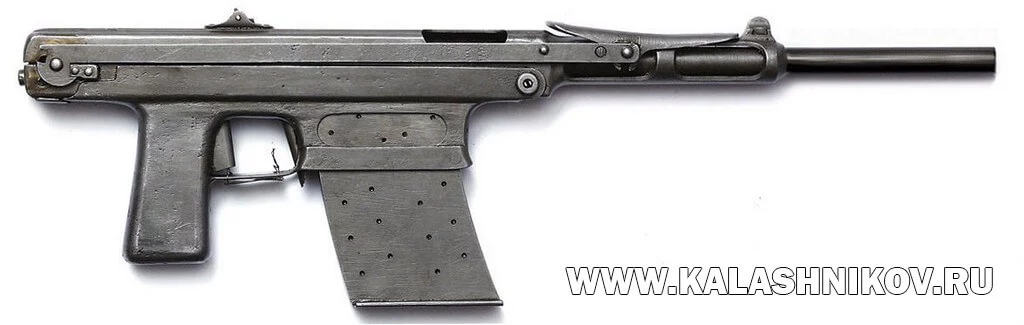
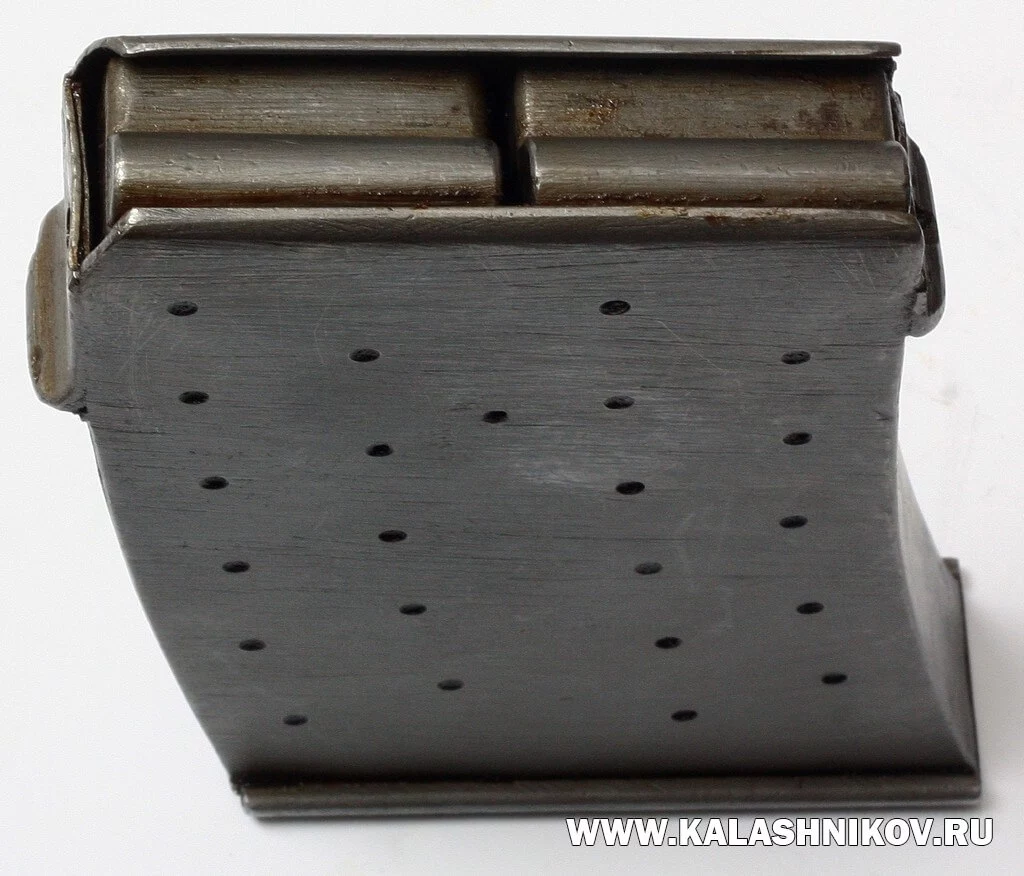
"In the new submachine gun, Zubkov used a simpler tandem two-row magazine. The magazine is designed as a rectangular box divided by a vertical partition into two sections (compartments) arranged one behind the other. Each compartment has a separate feeder, allowing the cartridges to be placed in two rows (in a staggered order). Both compartments of the magazine were loaded with cartridges in the usual manner.The capacity of Zubkov's new magazine decreased from 60 to 40 cartridges, but overall reliability increased."
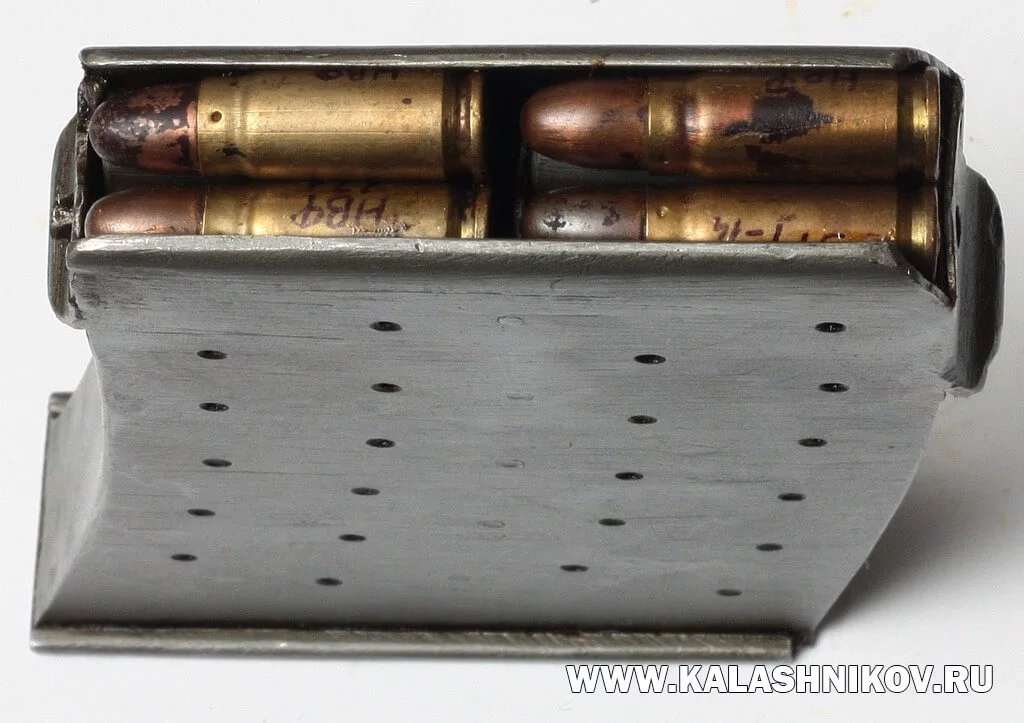
The magazine of the second model submachine gun of Zubkov, loaded with cartridges. Photo by VIMAIViVS.
Second Model Statistics and characteristics
-Open Bolt
-Chambering: 7.62 Tokarev
-Magazine Capacity: 40
-Length with Stock folded: 531mm (20.9in)
-Length with stock unfolded: 836mm (32.9in)
-Height with magazine inserted: 162mm (6.37in)
-Barrel Length: 250mm (9.84in)
-Weight without magazine: 2.24kg (4.93lbs)
-Weight with unloaded magazine: 2.58kg (5.68lbs)
-Weight with loaded magazine: 3.01kg (6.63lbs)
-Bolt Weight: 0.542kg (1.19lbs)
-Bolt Travel: 84mm (3.3in)
-When field stripped # of parts is 5, total system has 18 parts)
"The submachine gun with an improved magazine designed by Zubkov functioned as follows. The magazine with cartridges was attached to the weapon from below and secured with a spring-loaded latch. The feeding of a cartridge into the chamber by the bolt was carried out from the nearest (front) section of the magazine to the breech of the barrel. At the same time as the cartridge was being fed from the front section, a special projection-feeder on the bolt shifted forward by one step and placed a new cartridge from the rear section of the magazine in its place. Thus, during firing, the first (top) cartridge from the front section of the magazine was fed into the chamber first, and thereafter cartridges from the rear section began to be consumed. After the cartridges from the rear section of the magazine were exhausted, the bolt commenced to feed cartridges from the front section in the usual manner."
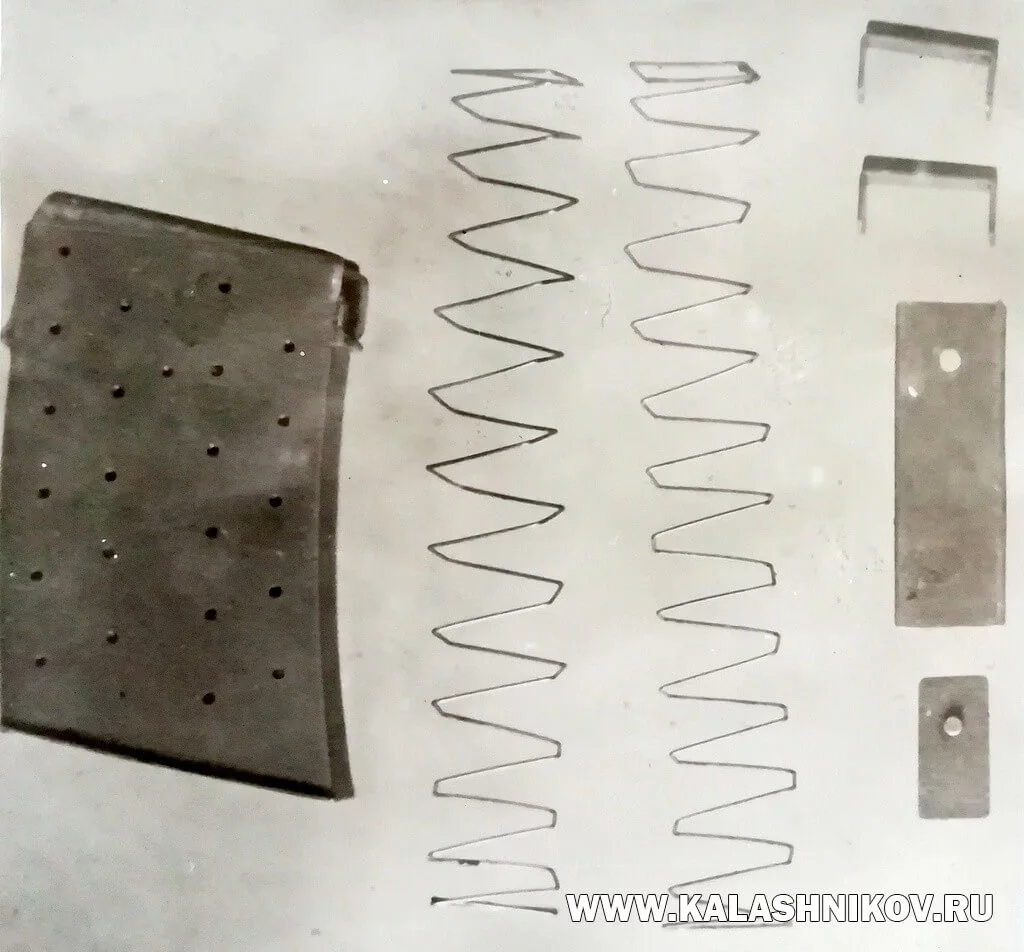
"The magazine of the second model of the submachine gun Zubkov in disassembled form."
"The main drawback of the Zubkov magazine, revealed during testing, was the need to load both sections with an equal number of cartridges. Otherwise, after the cartridges in one section (especially the front one) were expended, the feed of cartridges into the chamber would stop, and firing would cease. This is unacceptable for a combat weapon."
This concludes the section of the article about the Zubkov submachinegun, with only the relevant details included
However at the end of the article there is a short segment about mother similar guns
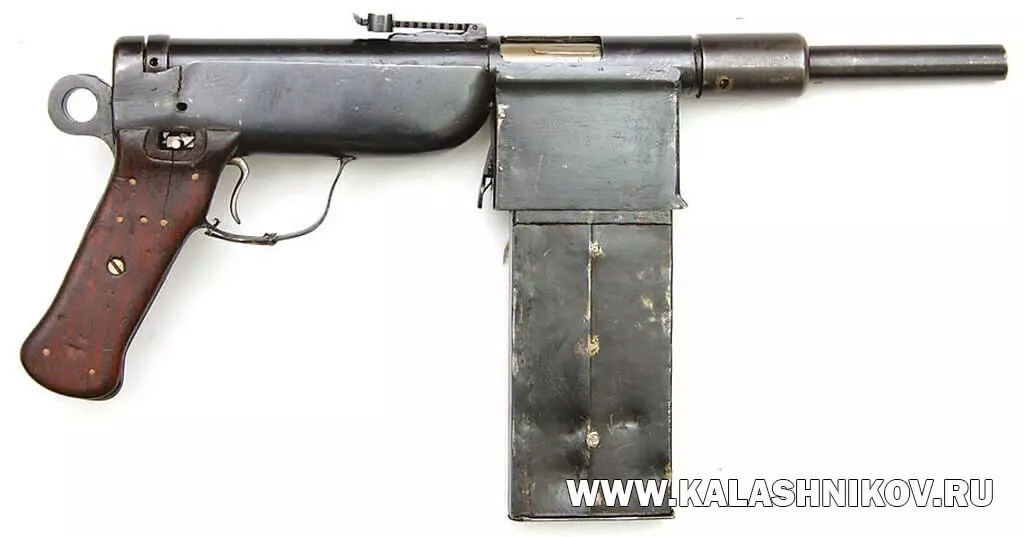
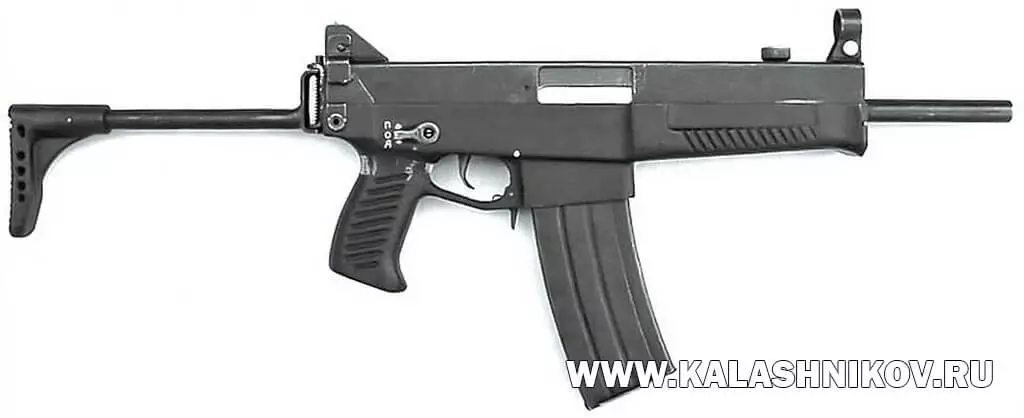
Namely the Volkov-Chukhmaty and the OC-53, no detailed information is provided about the guns so I'll just post their photos.
Volkov-Chukhmaty
OC-53, designed at Tula by Vladimir Zlobin, which I'm pretty sure is the same Zlobin that played a large role in designing the infamous AK-12 prototype
The thing I find curious about these sorts of psuedo obscure guns, is that it means they have (in theory I suppose) ammo for them, meaning that somewhere out there in various places is fairly decent supplies of 8x33 still hanging around
It's my understanding that 99.9999999% of all Sturmgewehr's in Syria were seized from one government warehouse (I want to say near or in Aleppo but have no source for this) during the earlier parts of the Syrian Civil War. Terrorists found them packed in grease, undisturbed for decades after Syria received them (I want to say 5000 or so) as Military aid from Czechoslovakia in the 50's. Syrians never got around to using them or pawning off them off to some guerillas so the terrorist forces used them until they shot most of the ammo up so now they're mainly bought and sold as collectors pieces.
BREAKING NEWS
I got a reply back from the curator. They have both the prototype and the finished model.
View attachment 7797762
Thank you so very much you have made a serious contribution to firearms history, please ask them if there is any way they (the curator) or the museum staff could take a high quality photo of the gun. Better yet, give them Ian's contact info and tell them that they could immortalize Mr. Lisk and preserve history by letting him do a video on it.


