
Wraithdolf the White
kiwifarms.net
- Joined
- Apr 16, 2025
I don't know if this works for news articles, so I will put it here with an explanation.
Diversity's new name to hide it? DIALOGUE.
"Diversity Training Is Out. Dialogue Workshops Are In.
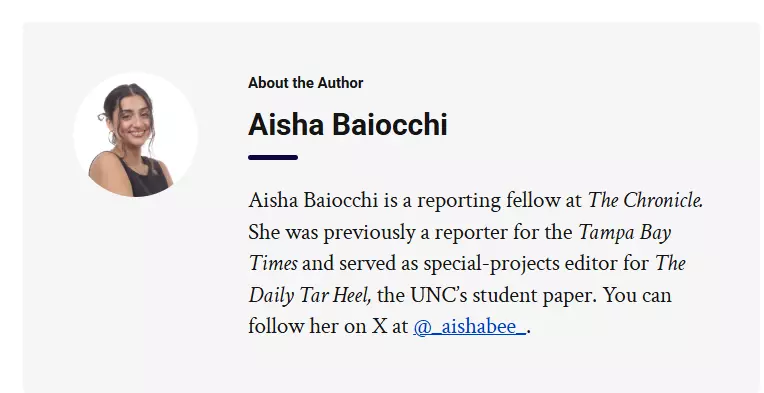
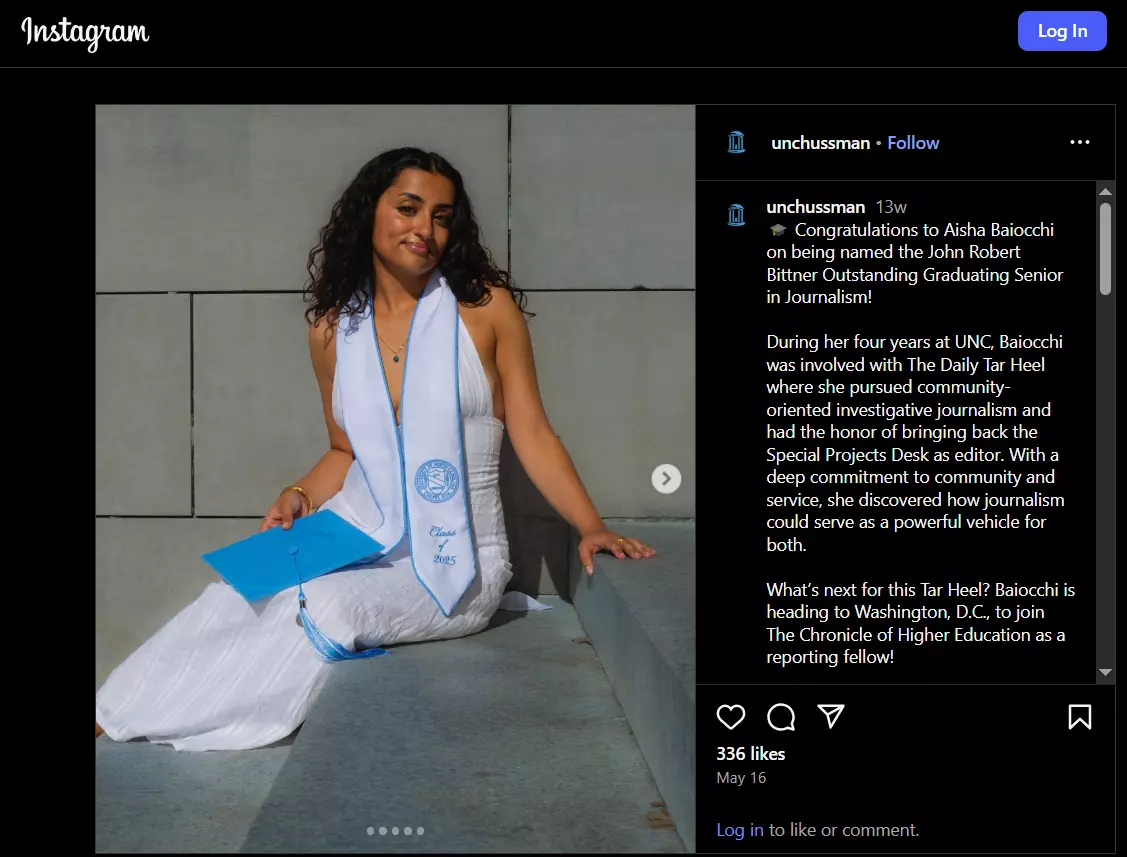
By Aisha Baiocchi August 7, 2025
As colleges across the nation phase out diversity, equity, and inclusion initiatives, many have started to phase in programs with a new focus: “dialogue.”
It’s unclear whether the new embrace was precipitated by colleges’ abandonment of DEI amid state and federal scrutiny. But campuses that once touted the importance of inclusivity are now training students to talk through their differences.
To do that, dozens of colleges are turning to an organization founded by a familiar face: Jonathan Haidt, the New York University social psychologist and perennial opiner on campus culture. The nonprofit Constructive Dialogue Institute, which Haidt co-founded with Caroline Mehl, sells training programs to campus clients.
And business is booming. Mehl said that in the 2023-24 academic year, the institute had 35 clients for their campuswide programming. That number has grown to more than 100.
The swift transition from DEI to disagreement is not lost on college leaders. “I think this is a future for DEI,” said Kristin G. Esterberg, chancellor of the University of Washington at Bothell, which has partnered with the CDI while maintaining its DEI work. “Not necessarily the future, but a future for the work of equity and inclusion.”
Haidt has long criticized what he sees as a lack of robust debate on campuses. He is also the co-founder of Heterodox Academy, an organization dedicated to fostering viewpoint diversity on campuses, and co-author of a 2018 book that critiques the “coddling” of American youth. In 2022, Haidt wrote that he would leave a professional association over a mandated diversity statement, and has since criticized DEI more broadly.
Mehl, who had previously worked as a researcher for Haidt and came from a background in private equity, said her interest in addressing polarization peaked around the 2016 presidential election. She said when she and Haidt co-founded the CDI, they planned to offer campuswide programming, focusing on things like orientation, but when they got started there wasn’t an “appetite” for it.
“Instead, what we were seeing was that individual faculty members had a lot of interest in this work,” she said. “And so for the first about six years, we were still kind of hoping to do this work at the orientation-wide level, but in the meantime, we were really just focusing on influencing classrooms by supporting faculty members and creating environments that allowed for meaningful conversations about challenging topics.”
In the fall of 2023, Mehl said, that lack of “appetite” began to change, and more institutions became interested in the CDI’s programming. She cited an incident at Stanford Law School in March 2023, after which the law-school dean sent a public apology to a federal judge who had been booed off stage by protesters, as a turning point demonstrating a growing interest in free speech.
The following fall, the nonprofit’s blended learning program, Perspectives, was incorporated into a number of colleges’ freshman orientations.
Perspectives is a six-lesson virtual program that can be paired with optional peer-to-peer exercises for students to practice what they learn with each other. The CDI also offers a number of add-ons, including a variety of certifications for faculty, administrators, student-facing staff, and student leaders.
The program teaches two theories of behavioral science, grounded in Haidt’s work: the basics of how humans process information, and the psychology of biases and division. The subsequent lessons apply those theories to five “principles for constructive dialogues.” The final lesson, “moving forward together,” teaches students to find what is shared between themselves and peers they disagree with, and encourages moving away from a disagreement framework.
Students and educators can access Perspectives on the CDI website for free, but colleges can purchase scalable versions of the program and additional CDI offerings. Mehl explained that the cost can vary between $20,000 and $70,000 per year, based on enrollment, coming out to between $1.50 to $7.50 per student. Mehl also said that because CDI is a nonprofit, its prices are on a sliding scale, and financial aid or assistance is often available to campuses that cannot afford their standard rates.
“We felt that it worked pretty well in having prevention and education talks around everything from conflict mediation to intercultural conversations, interfaith conversations,” Stelljes said.
In Virginia, the CDI worked with 12 colleges and universities to bolster campuswide discourse initiatives. One of them, James Madison University, had started to look into initiatives a semester prior when Virginia’s Republican governor, Glenn Youngkin, held a higher-education summit in which he called on all colleges in the state to include some free-speech training in their curriculum.
Kara Dillard, executive director of JMU’s Madison Center for Civic Engagement, said the university organized a few events run by her center after Youngkin’s request, but found a need for a more scalable solution, leading them to include Perspectives in their freshman orientations.
“We thought that that was deeply important,” she said. “That the first touch point that they had with the university is in training in free speech, freedom of expression, and how they can relate to those concepts.”
The City University of New York announced a similar partnership in February. Rachel Stephenson, chief transformation officer, said each of the 26 CUNY colleges sent leadership teams to two-day constructive-dialogue leadership institutes in June and July, and moving forward, each campus will decide how they want to implement CDI training and resources.
After orientation, CDI programs that are embedded into first-year seminars and gen-ed requirements tend to be the most popular, Mehl said.
Even at smaller institutions, like Holy Cross College, that didn’t have encampments or too many protests, the potential for conflict and division on campus was enough to lead administrators to look to organizations like the CDI. Caitlin MacNeil, associate director of student involvement at Holy Cross, said programs like Perspectives and other free-speech-related activities are helpful in making sure students know their rights and campus policies.
“We want to make sure our students are, I guess, not confusing the media, or what they see on the media, for what practically can play out for them as a student at our institution,” MacNeil said.
Lawmakers’ condemnation of the disruption and antisemitic speech that occurred at some protests last year has been accompanied by state and federal action to rid colleges of “divisive concepts.” Campuses from coast to coast have responded by eliminating DEI initiatives, just as more training in “constructive dialogue” is sprouting up. Mehl said the relationship between DEI and the CDI programming is simply that both seek to “influence” students at orientations.
Administrators said better training students in how to disagree doesn’t come at the expense of identity. Dillard, of James Madison, said CDI programming encourages students to come in as their “full selves,” not checking any part of their identity at the door and making conversations about polarizing topics, like policing and immigration, more fruitful. James Madison eliminated its DEI office in April.
In illustrating the value of the CDI programming, Dillard relayed an anecdote about a student with conservative political opinions who initially felt like higher education wasn’t open to their views. But after participating in her class activity that followed some of the philosophies outlined by CDI material, Dillard said, they felt like they belonged.
At UW Bothell and in the CUNY system, administrators said constructive dialogue actually works hand in hand with both the diversity of their colleges and the DEI initiatives in place.
“CUNY is one of the most diverse institutions of higher education in the country,” said Stephenson. “Members of our community represent all possible perspectives, so many different lived experiences, so many different viewpoints. And this is an initiative that is really helping us to articulate shared goals.”
And at UW Bothell, the CDI partnership is advertised through the webpage of the DEI office, which is still in place thanks to a supportive State Legislature. Esterberg said constructive dialogue can work even in states with outright DEI bans, and that it may help improve upon what students hear when they get to campus.
“I think it’s really important that we look at the research and try and understand what practices actually shift people’s hearts and minds, as opposed to closing people’s minds,” she said. “And I think there are some elements in previous kinds of training that closed folks’ minds rather than open them.”
We welcome your thoughts and questions about this article. Please email the editors or submit a letter for publication."
I had to convert their diversity->dialogue "gif" to something else because it was over 18 megs. EVEN THEIR GIFS HAVE INTEREST RATES.
And yes, she's jewish. And no, she doesn't have khazart milkers. She has flat brown flap jacks.

![FireShot Capture 204 - Aisha Baiocchi jew at DuckDuckGo - [duckduckgo.com].webp](https://kiwifarms.st/attachments/fireshot-capture-204-aisha-baiocchi-jew-at-duckduckgo-duckduckgo-com-webp.7810640/ "FireShot Capture 204 - Aisha Baiocchi jew at DuckDuckGo - [duckduckgo.com].webp")
Diversity's new name to hide it? DIALOGUE.
"Diversity Training Is Out. Dialogue Workshops Are In.
By Aisha Baiocchi August 7, 2025
As colleges across the nation phase out diversity, equity, and inclusion initiatives, many have started to phase in programs with a new focus: “dialogue.”
It’s unclear whether the new embrace was precipitated by colleges’ abandonment of DEI amid state and federal scrutiny. But campuses that once touted the importance of inclusivity are now training students to talk through their differences.
To do that, dozens of colleges are turning to an organization founded by a familiar face: Jonathan Haidt, the New York University social psychologist and perennial opiner on campus culture. The nonprofit Constructive Dialogue Institute, which Haidt co-founded with Caroline Mehl, sells training programs to campus clients.
And business is booming. Mehl said that in the 2023-24 academic year, the institute had 35 clients for their campuswide programming. That number has grown to more than 100.
The swift transition from DEI to disagreement is not lost on college leaders. “I think this is a future for DEI,” said Kristin G. Esterberg, chancellor of the University of Washington at Bothell, which has partnered with the CDI while maintaining its DEI work. “Not necessarily the future, but a future for the work of equity and inclusion.”
A Shift
Haidt and Mehl created the CDI in 2017 to combat the “division and distrust threatening to tear America apart,” its website states.Haidt has long criticized what he sees as a lack of robust debate on campuses. He is also the co-founder of Heterodox Academy, an organization dedicated to fostering viewpoint diversity on campuses, and co-author of a 2018 book that critiques the “coddling” of American youth. In 2022, Haidt wrote that he would leave a professional association over a mandated diversity statement, and has since criticized DEI more broadly.
Mehl, who had previously worked as a researcher for Haidt and came from a background in private equity, said her interest in addressing polarization peaked around the 2016 presidential election. She said when she and Haidt co-founded the CDI, they planned to offer campuswide programming, focusing on things like orientation, but when they got started there wasn’t an “appetite” for it.
“Instead, what we were seeing was that individual faculty members had a lot of interest in this work,” she said. “And so for the first about six years, we were still kind of hoping to do this work at the orientation-wide level, but in the meantime, we were really just focusing on influencing classrooms by supporting faculty members and creating environments that allowed for meaningful conversations about challenging topics.”
In the fall of 2023, Mehl said, that lack of “appetite” began to change, and more institutions became interested in the CDI’s programming. She cited an incident at Stanford Law School in March 2023, after which the law-school dean sent a public apology to a federal judge who had been booed off stage by protesters, as a turning point demonstrating a growing interest in free speech.
The following fall, the nonprofit’s blended learning program, Perspectives, was incorporated into a number of colleges’ freshman orientations.
Perspectives is a six-lesson virtual program that can be paired with optional peer-to-peer exercises for students to practice what they learn with each other. The CDI also offers a number of add-ons, including a variety of certifications for faculty, administrators, student-facing staff, and student leaders.
The program teaches two theories of behavioral science, grounded in Haidt’s work: the basics of how humans process information, and the psychology of biases and division. The subsequent lessons apply those theories to five “principles for constructive dialogues.” The final lesson, “moving forward together,” teaches students to find what is shared between themselves and peers they disagree with, and encourages moving away from a disagreement framework.
Students and educators can access Perspectives on the CDI website for free, but colleges can purchase scalable versions of the program and additional CDI offerings. Mehl explained that the cost can vary between $20,000 and $70,000 per year, based on enrollment, coming out to between $1.50 to $7.50 per student. Mehl also said that because CDI is a nonprofit, its prices are on a sliding scale, and financial aid or assistance is often available to campuses that cannot afford their standard rates.
Campus Clients
Drew Stelljes, vice president for student affairs at Franklin & Marshall College, in Pennsylvania, said he started reading Haidt’s work in 2017 and 2018, and implemented it in classes he taught soon after. In the fall of 2024, his institution began working with the CDI on a campuswide level, offering Perspectives in their orientations for incoming students. Stelljes said student leaders and resident advisers now complete CDI training, as does much of the staff and faculty.“We felt that it worked pretty well in having prevention and education talks around everything from conflict mediation to intercultural conversations, interfaith conversations,” Stelljes said.
In Virginia, the CDI worked with 12 colleges and universities to bolster campuswide discourse initiatives. One of them, James Madison University, had started to look into initiatives a semester prior when Virginia’s Republican governor, Glenn Youngkin, held a higher-education summit in which he called on all colleges in the state to include some free-speech training in their curriculum.
Kara Dillard, executive director of JMU’s Madison Center for Civic Engagement, said the university organized a few events run by her center after Youngkin’s request, but found a need for a more scalable solution, leading them to include Perspectives in their freshman orientations.
“We thought that that was deeply important,” she said. “That the first touch point that they had with the university is in training in free speech, freedom of expression, and how they can relate to those concepts.”
The City University of New York announced a similar partnership in February. Rachel Stephenson, chief transformation officer, said each of the 26 CUNY colleges sent leadership teams to two-day constructive-dialogue leadership institutes in June and July, and moving forward, each campus will decide how they want to implement CDI training and resources.
After orientation, CDI programs that are embedded into first-year seminars and gen-ed requirements tend to be the most popular, Mehl said.
The CDI and DEI
After protests over the Israel-Hamas war spread across campuses in the spring of 2024, more colleges have shown interest in fostering civil discourse, Mehl said.Even at smaller institutions, like Holy Cross College, that didn’t have encampments or too many protests, the potential for conflict and division on campus was enough to lead administrators to look to organizations like the CDI. Caitlin MacNeil, associate director of student involvement at Holy Cross, said programs like Perspectives and other free-speech-related activities are helpful in making sure students know their rights and campus policies.
“We want to make sure our students are, I guess, not confusing the media, or what they see on the media, for what practically can play out for them as a student at our institution,” MacNeil said.
Lawmakers’ condemnation of the disruption and antisemitic speech that occurred at some protests last year has been accompanied by state and federal action to rid colleges of “divisive concepts.” Campuses from coast to coast have responded by eliminating DEI initiatives, just as more training in “constructive dialogue” is sprouting up. Mehl said the relationship between DEI and the CDI programming is simply that both seek to “influence” students at orientations.
Administrators said better training students in how to disagree doesn’t come at the expense of identity. Dillard, of James Madison, said CDI programming encourages students to come in as their “full selves,” not checking any part of their identity at the door and making conversations about polarizing topics, like policing and immigration, more fruitful. James Madison eliminated its DEI office in April.
In illustrating the value of the CDI programming, Dillard relayed an anecdote about a student with conservative political opinions who initially felt like higher education wasn’t open to their views. But after participating in her class activity that followed some of the philosophies outlined by CDI material, Dillard said, they felt like they belonged.
At UW Bothell and in the CUNY system, administrators said constructive dialogue actually works hand in hand with both the diversity of their colleges and the DEI initiatives in place.
“CUNY is one of the most diverse institutions of higher education in the country,” said Stephenson. “Members of our community represent all possible perspectives, so many different lived experiences, so many different viewpoints. And this is an initiative that is really helping us to articulate shared goals.”
And at UW Bothell, the CDI partnership is advertised through the webpage of the DEI office, which is still in place thanks to a supportive State Legislature. Esterberg said constructive dialogue can work even in states with outright DEI bans, and that it may help improve upon what students hear when they get to campus.
“I think it’s really important that we look at the research and try and understand what practices actually shift people’s hearts and minds, as opposed to closing people’s minds,” she said. “And I think there are some elements in previous kinds of training that closed folks’ minds rather than open them.”
We welcome your thoughts and questions about this article. Please email the editors or submit a letter for publication."
I had to convert their diversity->dialogue "gif" to something else because it was over 18 megs. EVEN THEIR GIFS HAVE INTEREST RATES.
And yes, she's jewish. And no, she doesn't have khazart milkers. She has flat brown flap jacks.


