
Yugica
kiwifarms.net
- Joined
- Mar 16, 2021
Charles Darwin has a famous quote relating to his hatred of barnacles.
Darwin's work did however provide a great deal of insight into barnacles as a group, even if they did frustrate him to no end. It's no wonder that barnacles would've been a troubling thing for Darwin though as many species of barnacles are very alien or odd. In particular parasitic barnacles scarcely even seem like animals. The Rhizocephala(meaning "root head") being the prime example. They're a group of parasitic castrators, meaning that they either hinder reproduction greatly or completely castrate their host whilst parasitizing them. In the case of this group however they most often destroy the gonads of their hosts and form large, root-like extensions of themselves throughout them as this depiction shows.

For many crabs they'll also form a large mass, seen in that depiction as well, on their pleon(their tail, in true crabs this is folded up under the belly) where they would otherwise carry their eggs. In both sexes for the hosts of Sacculina genus individuals they are feminized and seem to take care of that mass in place of eggs as if it were their own young. Males who have been infected and then have the parasite removed will not regenerate their testes but instead regenerate ovaries in their place, showing that the impact of the parasite is very strong in regards to things relating to sexual development and hormones.
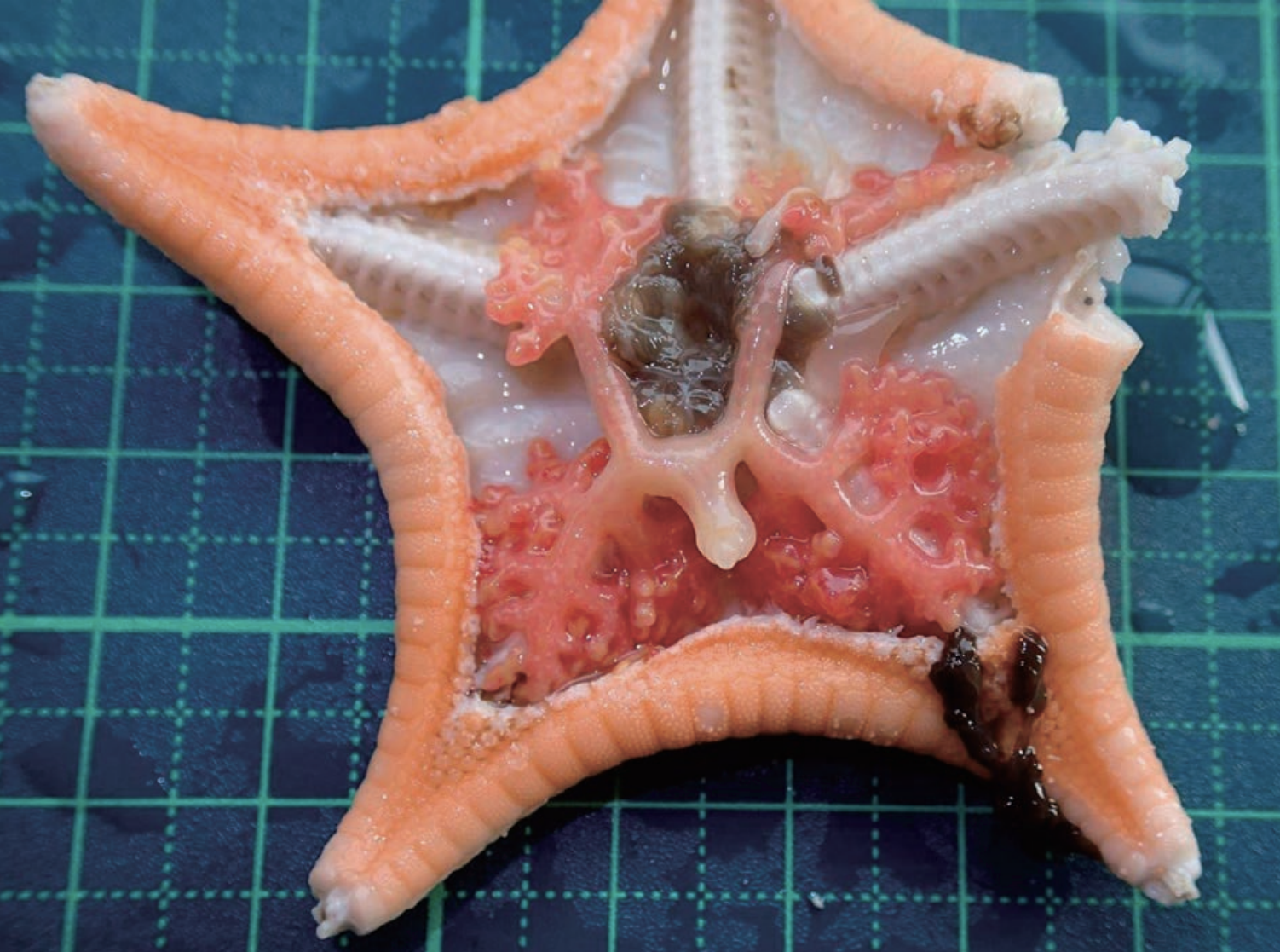
Despite the oddities of the Rhizocephala though, they are most definitely close relatives to barnacles and their internal anatomy helps to reveal that. Weirder still is that they're not the only kind of close relative to the common barnacles we know that have evolved this tree-like and parasitic life plan. Dendrogaster(meaning "tree stomach" or "tree belly") is a close relative of barnacles, in fact the clade(Ascothoracida, which contains Dendrogaster and also Laurida which also are like Dendrogaster) they're from are currently believed to be the closest relatives of barnacles. For Dendrogaster specifically they parasitize starfish and form these branching structures within them. Here's a picture of one inside of a dissected starfish.
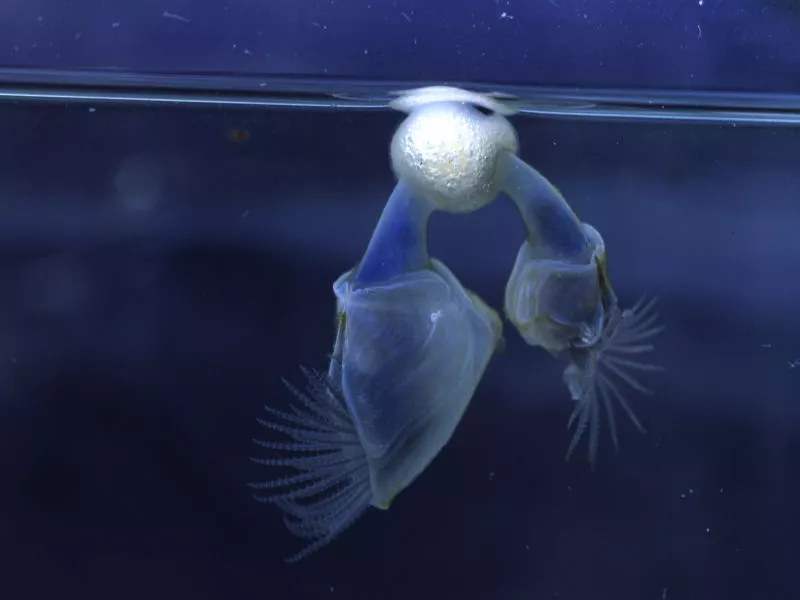
For something less horrific though, we have the Buoy Barnacles . They're pleustonic(meaning they live on/at the surface of the water) barnacles that float around and filter feed. They're also blue.
PBS Eons did a great video going into this quote and why it occurred(they also did a great video covering his final book on worms). It was largely due to how complex and odd barnacles are and his attempts to better classify them within his natural philosophy. Earlier naturalists had classified them as mollusks with more recent discovery(relative to Darwin's time, from William Thompson) having been made that suggested they were actually crustaceans due to their planktonic, larval life stage(s)."I hate a Barnacle as no man ever did before"
>t. Charles Darwin
Darwin's work did however provide a great deal of insight into barnacles as a group, even if they did frustrate him to no end. It's no wonder that barnacles would've been a troubling thing for Darwin though as many species of barnacles are very alien or odd. In particular parasitic barnacles scarcely even seem like animals. The Rhizocephala(meaning "root head") being the prime example. They're a group of parasitic castrators, meaning that they either hinder reproduction greatly or completely castrate their host whilst parasitizing them. In the case of this group however they most often destroy the gonads of their hosts and form large, root-like extensions of themselves throughout them as this depiction shows.
For many crabs they'll also form a large mass, seen in that depiction as well, on their pleon(their tail, in true crabs this is folded up under the belly) where they would otherwise carry their eggs. In both sexes for the hosts of Sacculina genus individuals they are feminized and seem to take care of that mass in place of eggs as if it were their own young. Males who have been infected and then have the parasite removed will not regenerate their testes but instead regenerate ovaries in their place, showing that the impact of the parasite is very strong in regards to things relating to sexual development and hormones.
Despite the oddities of the Rhizocephala though, they are most definitely close relatives to barnacles and their internal anatomy helps to reveal that. Weirder still is that they're not the only kind of close relative to the common barnacles we know that have evolved this tree-like and parasitic life plan. Dendrogaster(meaning "tree stomach" or "tree belly") is a close relative of barnacles, in fact the clade(Ascothoracida, which contains Dendrogaster and also Laurida which also are like Dendrogaster) they're from are currently believed to be the closest relatives of barnacles. For Dendrogaster specifically they parasitize starfish and form these branching structures within them. Here's a picture of one inside of a dissected starfish.
For something less horrific though, we have the Buoy Barnacles
. They're pleustonic(meaning they live on/at the surface of the water) barnacles that float around and filter feed. They're also blue.Barnacles also have the longest(and I think even largest) penis to body size ratios of any animal(s). Many barnacles can have penises 8x their body length. This is because barnacles need to be able to reach their penis into another barnacle in order to mate and their sessile lifestyle makes it pretty much impossible without a large tentacle penis. To my knowledge most barnacles are hermaphrodites too so just about every barnacle you see has a massive dick that it's hiding inside its shell.


 ):
):


